

Is Your Fabric DTF-Ready? A Quick Guide to the Best Blanks

Happy Friday! Let's Talk Fabric Compatibility
You've got a great design ready to go. Your customer wants it on... wait, is that a canvas tote? A polyester performance tee? A vintage cotton hoodie?
Here's the good news: DTF (Direct-to-Film) transfers work on just about everything. And that's not marketing fluff, it's one of the reasons we're huge fans of this printing method here at our veteran-owned shop.
Whether you're running a side hustle from your garage or managing a local screen printing business, knowing which fabrics play nice with DTF transfers can save you time, money, and those dreaded "oops, that didn't turn out right" moments. Let's break it down.
The "Almost Anything" List
DTF technology is like that friend who gets along with everyone at the party. Seriously, the compatibility is impressive:
✅ Cotton – The classic. Soft, breathable, and DTF loves it ✅ Polyester – Both light and dark colors (unlike sublimation!) ✅ Cotton-Poly Blends – The best of both worlds ✅ Canvas – Perfect for bags and totes ✅ Nylon – Great for jackets and athletic wear ✅ Fleece – Cozy hoodies and blankets ✅ Denim – Jeans, jackets, you name it
See what we mean? If you can heat press it, you can probably DTF it.
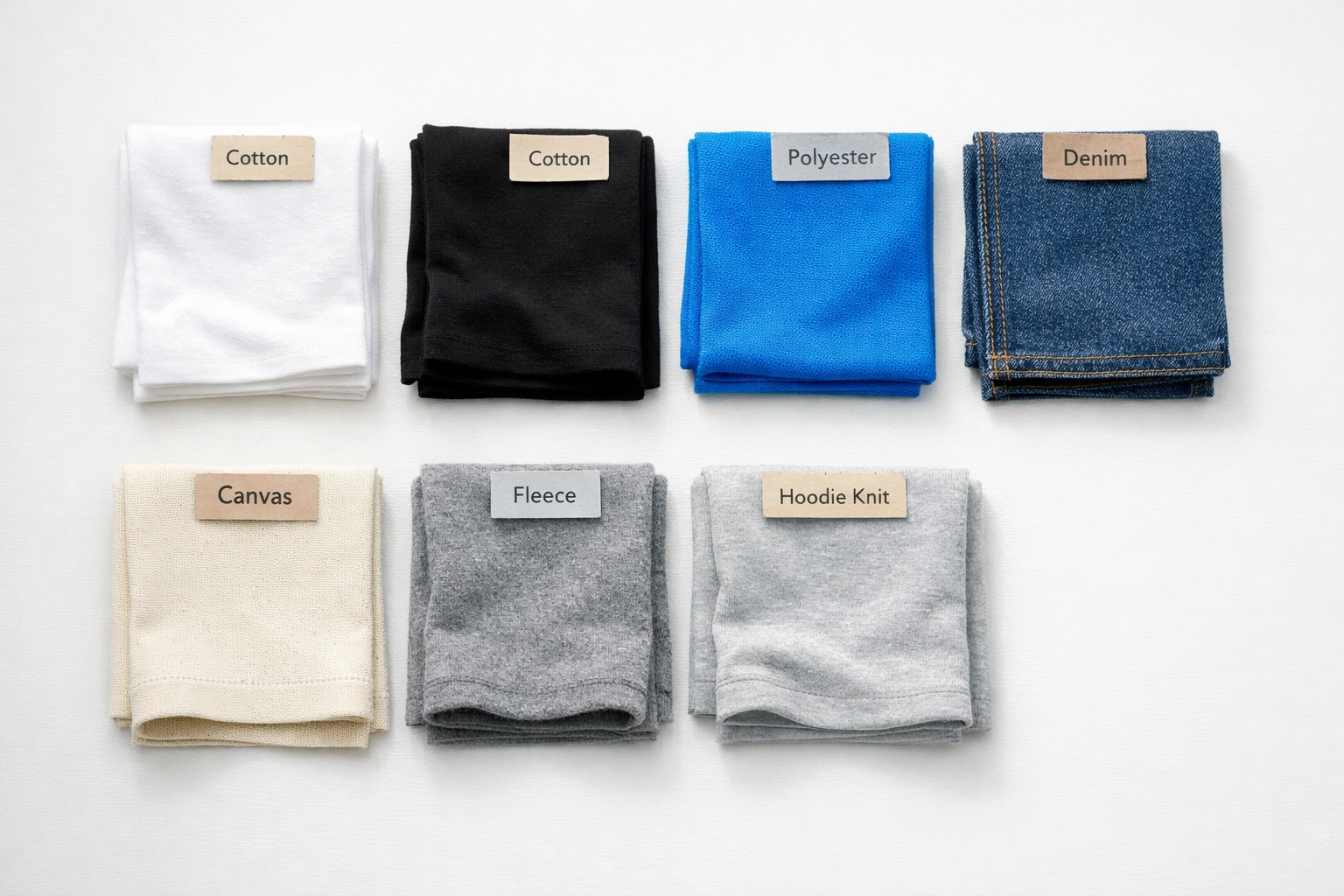
Your MVP Fabrics: The Hall of Fame
While DTF is incredibly versatile, some fabrics are straight-up rock stars when it comes to quality and consistency.
Cotton – The Crowd Favorite
Why it works: Cotton offers excellent color retention, a soft hand feel, and strong adhesion without any pre-treatment. The fibers grab onto that DTF adhesive powder like they were made for each other (spoiler: they basically were).
Best for: T-shirts, tote bags, canvas prints, and anything where that soft, breathable feel matters.
Pro tip: 100% cotton or high-cotton blends (80/20, 90/10) give you the most vibrant colors and longest-lasting prints.
Polyester – The Durable Performer
Why it works: Polyester is tough, wrinkle-resistant, and gives you those crisp, detailed prints that pop. Unlike sublimation printing, DTF works beautifully on dark polyester, which opens up a whole world of possibilities.
Best for: Performance wear, athletic apparel, moisture-wicking shirts, and products that need to withstand serious washing and wearing.
Heads up: Polyester can be a bit slippery, so firm, even pressure during pressing is key.
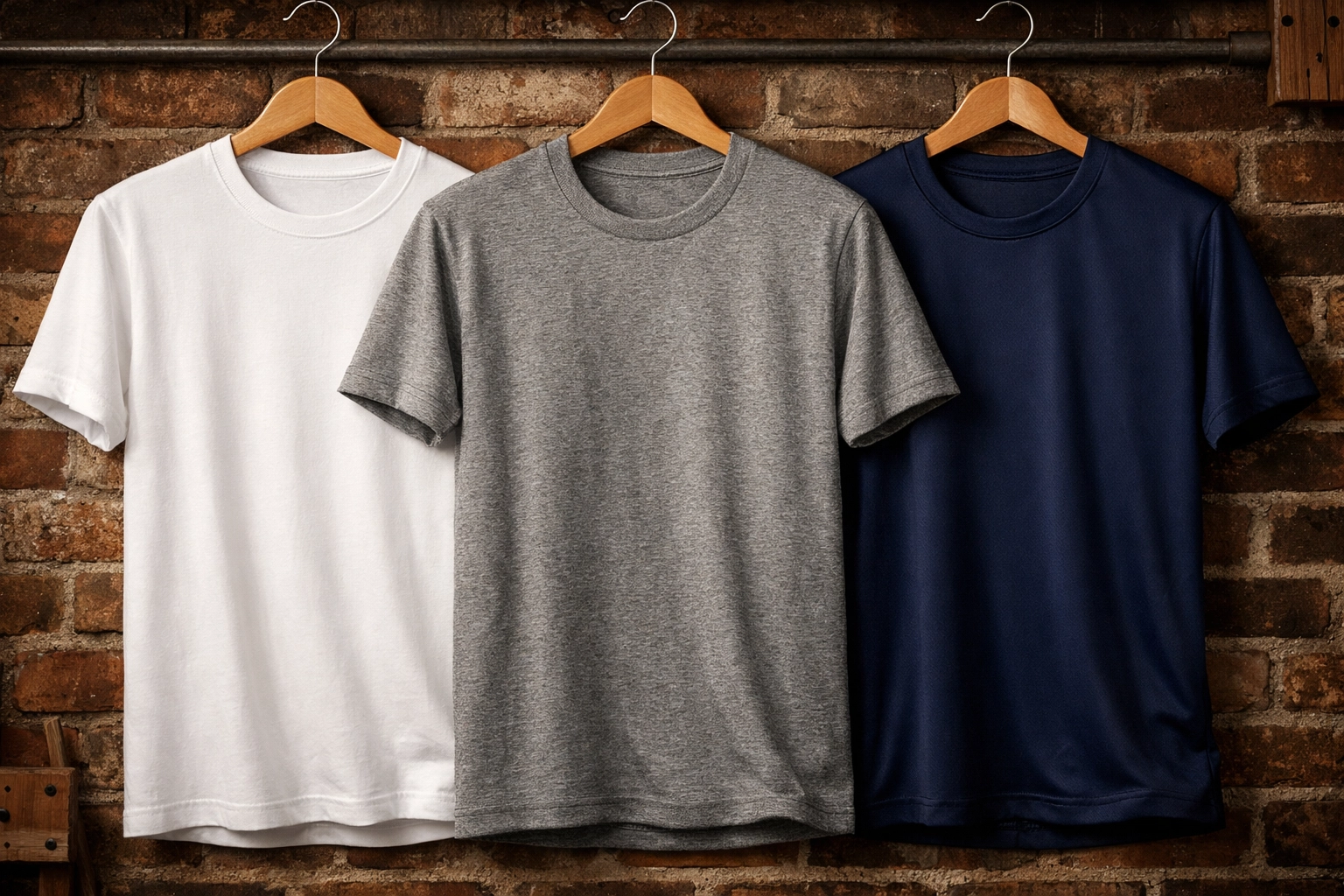
Cotton-Polyester Blends – The Goldilocks Option
Why it works: You get the softness and breathability of cotton with the durability and shape retention of polyester. It's the "just right" option for so many applications.
Best for: Hoodies, sweatshirts, everyday tees, and items that need to look good wash after wash.
Sweet spot: 50/50 or 60/40 blends are workhorses for most custom apparel businesses.
The Pre-Press Secret Nobody Talks About Enough
Okay, here's where we get real for a second. You want to know the difference between a DTF transfer that lasts 50+ washes and one that starts peeling after five?
Pre-pressing.
Yeah, that's it. That's the secret.
Why Pre-Pressing Matters
Every fabric, even brand-new blanks fresh from the bag, contains moisture. When you apply heat and pressure to a damp surface, a few things happen:
Steam interferes with adhesion – That moisture wants to escape, and it'll push right through your transfer as it does
Uneven pressure – Damp fabric doesn't lie as flat, creating air pockets
Color shifting – Excess moisture can affect how colors set
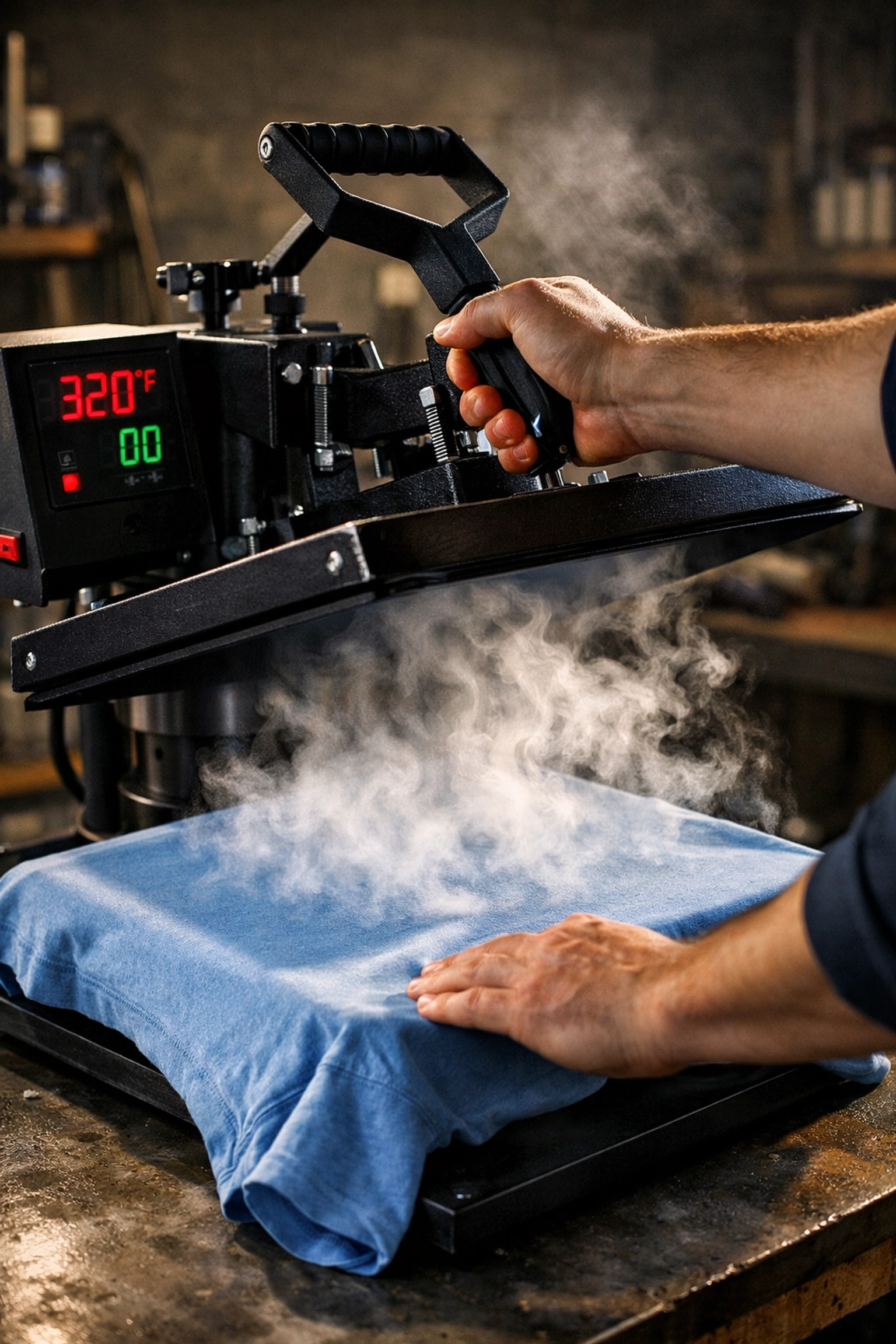
The fix is simple: Press your blank for 3-5 seconds before applying your DTF transfer. You're not trying to cook the shirt, just remove that hidden moisture and create a smooth, dry, flat surface for your design.
Think of it like preheating your oven. You wouldn't throw a pizza in a cold oven and expect perfect results, right? Same principle.
Pre-Pressing Pro Tips
Use medium to firm pressure
No need for a teflon sheet at this stage
Watch for steam escaping (that's the moisture saying goodbye!)
Let the garment cool for 5-10 seconds before applying your transfer
Fabrics That Need a Little Extra Love
Not every fabric is created equal, and some need special attention to get the best results.
Stretchy Fabrics (Spandex, Lycra)
DTF works on stretch fabrics, but here's the catch: if the fabric stretches significantly with wear, your design might crack over time.
Solution: For activewear and anything with serious stretch, consider placement carefully. Avoid areas that get maximum stretch (like right over the elbow on long sleeves).
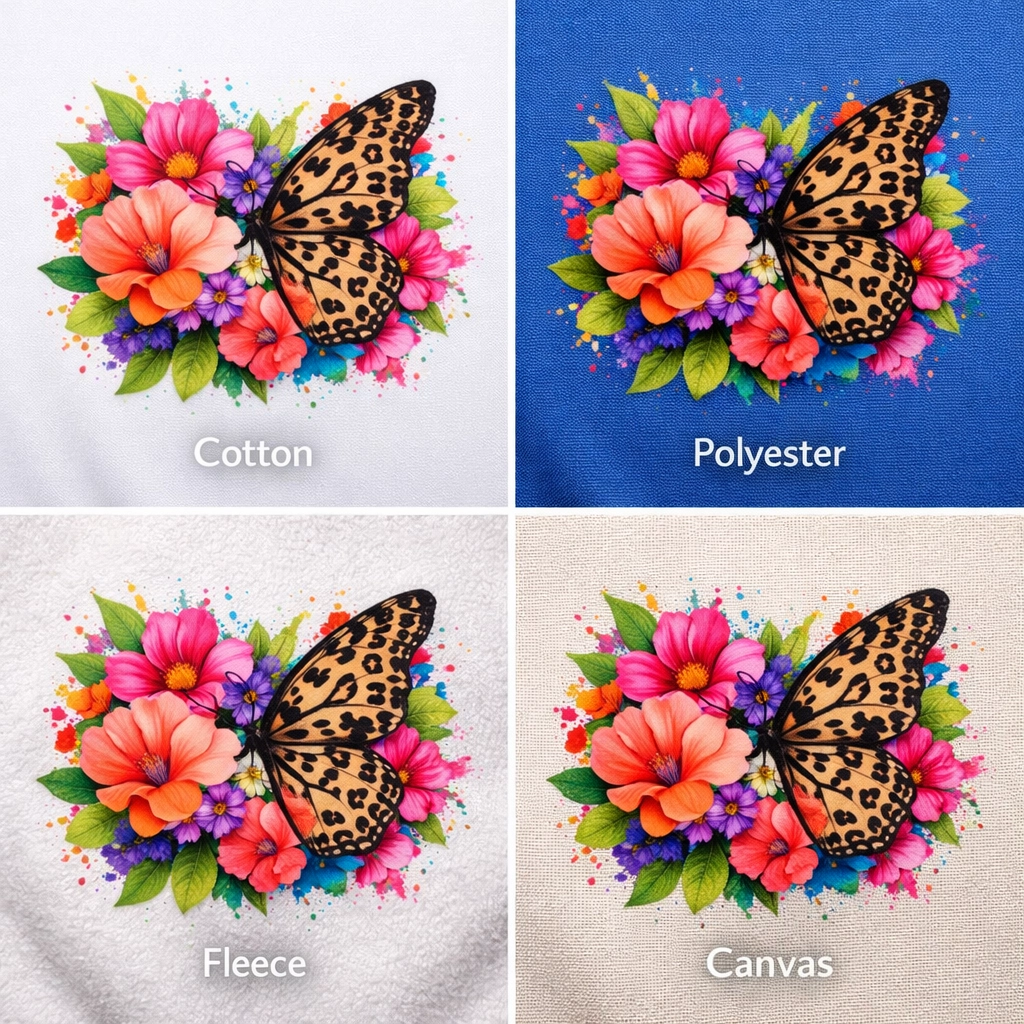
Heavyweight Materials (Canvas, Denim, Heavy Fleece)
These thicker materials work great with DTF, but they need more pressure and longer dwell time to ensure good adhesion through the texture.
Solution: Increase pressure to firm and add 2-3 seconds to your standard pressing time. Make sure your heat press makes full contact with the entire design area.
Textured Surfaces (Fleece, Terry Cloth)
Rough or pile fabrics can produce slightly less crisp results because the texture creates an uneven surface.
Solution: Use extra pressure to compress the pile, and consider designs with bolder lines rather than super-fine details.
Testing: Your Best Friend
Here's our veteran-owned, no-nonsense advice: Test before you commit.
Even with all the knowledge in the world, every brand of blanks can have slight variations. Different dye processes, fabric treatments, and manufacturing methods can affect how well a DTF transfer bonds.
Quick testing protocol:
Order one or two samples of any new blank you're considering
Apply your DTF transfer using your standard settings
Let it cure for 24 hours
Run it through a wash cycle
Evaluate color vibrancy, adhesion, and hand feel
Takes an extra day or two? Sure. But it beats reprinting 50 failed shirts.
Why This Matters for Your Business
Whether you're just starting out or you've been in the custom apparel game for years, fabric knowledge gives you a competitive edge.
Here's why:
No minimum orders mean you can experiment – At our shop, we don't force you into huge commitments. Want to test DTF on that organic cotton line before going all-in? Do it. One transfer or one hundred, we're here for it.
Better customer service – When you understand fabric compatibility, you can guide your customers to the best blanks for their needs. That builds trust and repeat business.
Less waste, more profit – Knowing which fabrics work best means fewer do-overs and returns. Your margins thank you.
Expand your product line – Once you know DTF works on canvas, suddenly you can offer tote bags. Works on nylon? Hello, custom windbreakers. More products = more revenue streams.
The Bottom Line
Is your fabric DTF-ready? If it can handle heat and pressure, the answer is probably yes. But for the best results: the kind that have customers coming back and leaving five-star reviews: stick with cotton, polyester, and quality blends, and never skip the pre-press.
And remember: we're a veteran-owned business that gets it. No minimum orders. No hassle. Just quality DTF transfers that work on the blanks you love.
Got questions about whether a specific fabric will work? Reach out to us: we're always happy to talk shop.
Now go make something awesome. 🎨
Quick Tip posted on Friday, February 27, 2026
Comments